Guessing, Stalling, and Forgetting: 5 Signs of Hidden Learning Gaps
November 27, 2025
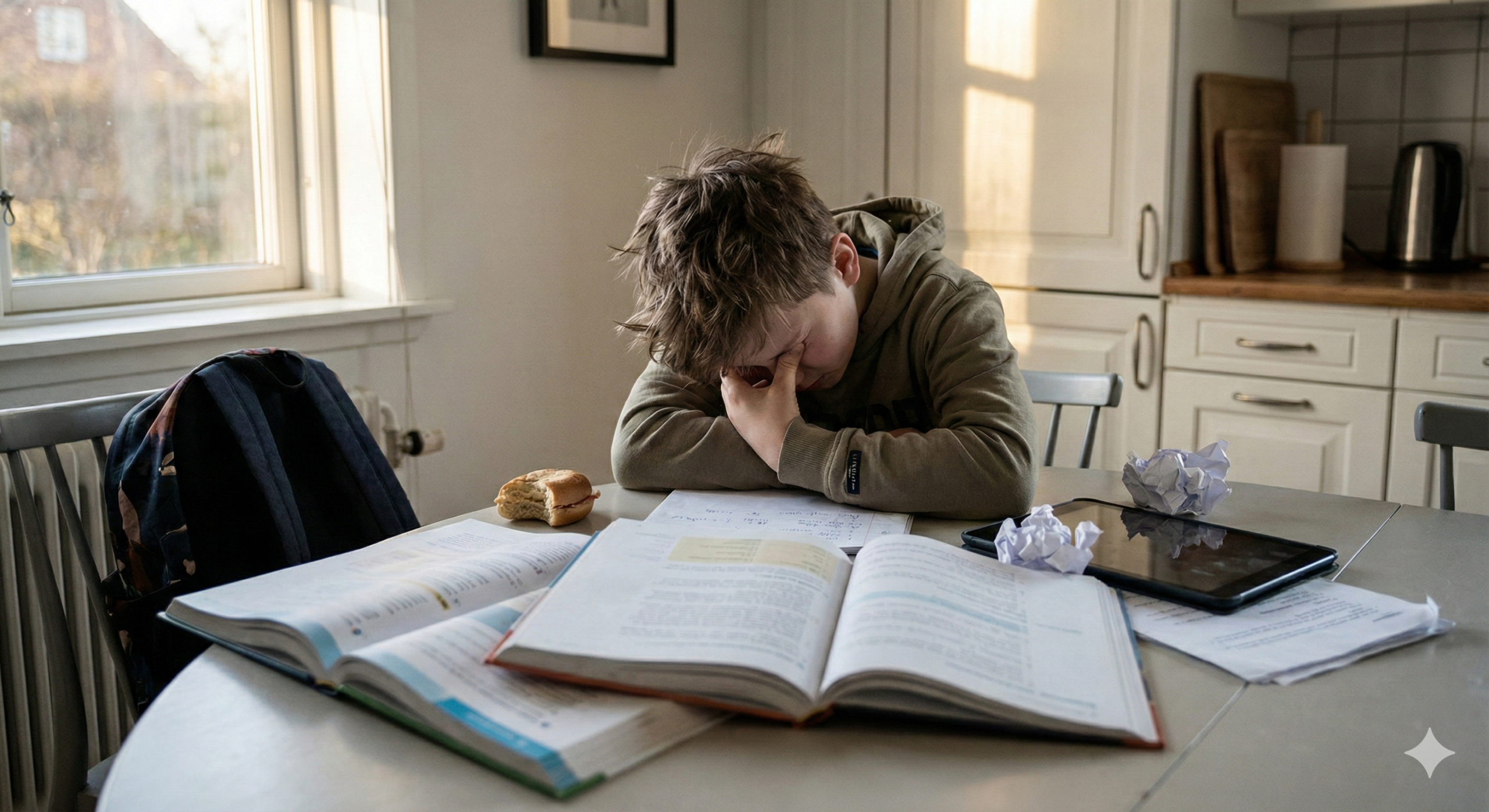
“It shouldn’t take this much effort for him to succeed.”
Does this sound familiar? You watch your child work tirelessly, knowing they are bright and capable, yet the results don’t seem to match the effort. It is heartbreaking to watch, and frustrating to experience.
The truth is, this struggle isn’t about laziness, lack of intelligence, or “not trying hard enough.” It is often a sign of gaps in the invisible core skills that make reading, math, and comprehension possible.
When these foundations are missing, your child has to work double-time just to keep up. Here are five everyday signs that your child is working harder than they need to—and the reasons why.
Sign 1: Guessing at Words Instead of Decoding Them
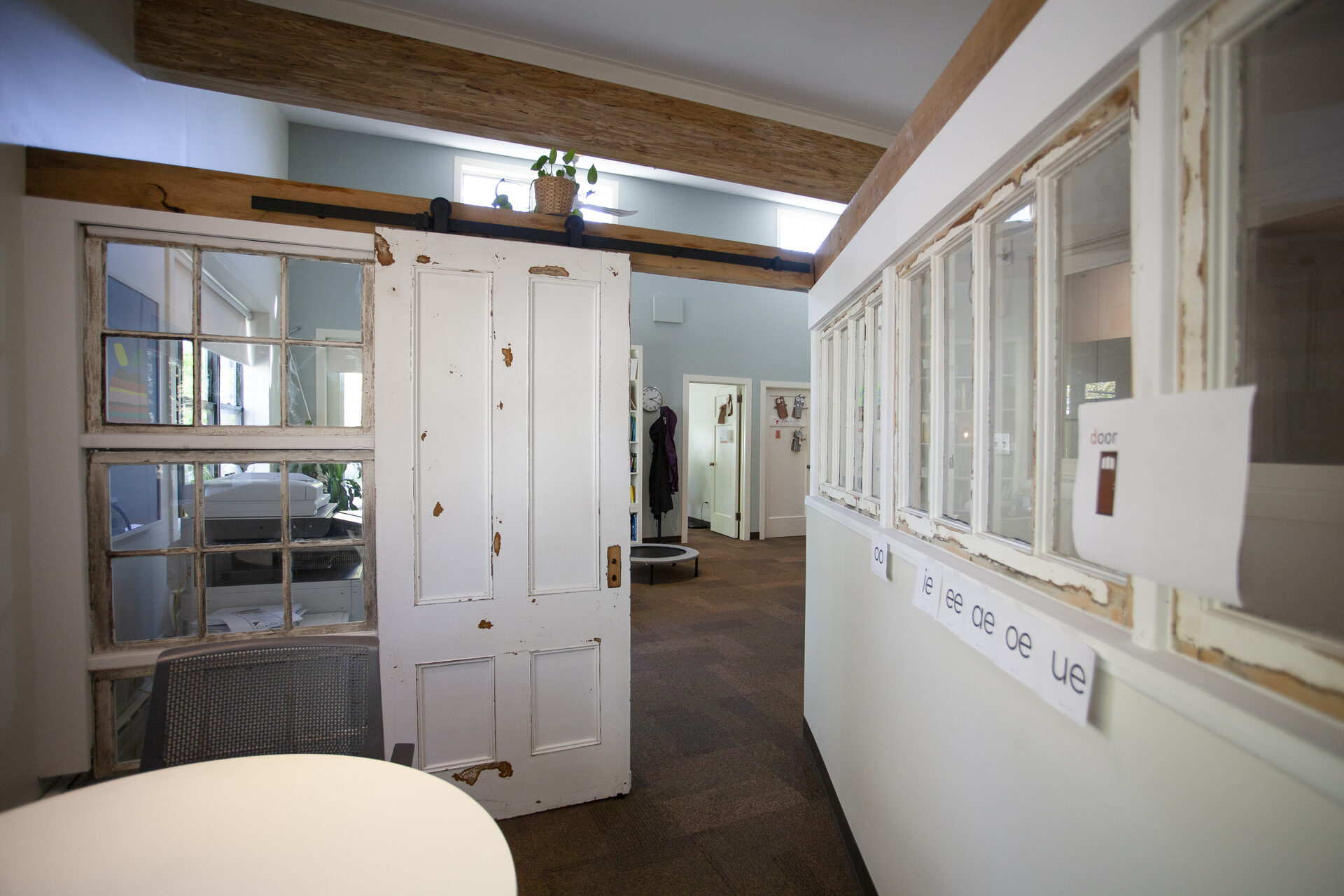
What you see: Your child looks at a word, pauses, or doesn’t, and then makes a guess based on the first letter or what might fit. “Horse” becomes house. “Sleep” becomes slip. Sometimes the guess even makes sense in the sentence — but it isn’t the word on the page.
Why it happens: This usually means the sound–symbol connection isn’t solid yet. Instead of confidently matching letters to sounds, your child relies on memory or context. That strategy only works for so long before it starts holding them back.
Sign 2: Reading the Words but Not Retaining the Meaning
What you see: Your child can read through a page or even a chapter, but when you ask what it was about, they struggle to explain. Retelling or summarizing feels out of reach, even though they’ve read every word.
Why it happens: Their effort is going into saying the words correctly, leaving little energy left for building meaning. Without turning words into mental images or “mind movies,” comprehension doesn’t click the way it should. And the ability to turn even fluent reading into meaning, shouldn’t be assumed.
Sign 3: Math Problems Take Far Longer Than They Should
What you see: A short homework assignment can take an hour. They may still count on fingers for simple addition, or maybe it’s that multiplication tables just won’t “stick.” Word problems can feel impossible, even with practice.
Why it happens: The core skill of visualizing numbers and quantities isn’t fully in place. Without that foundation, math facts don’t become automatic, and problem-solving feels like wading through mud.
Sign 4: Homework Avoidance That Goes Beyond Normal Resistance
What you see: Reading or writing assignments turn into stalling, bargaining, or doing the bare minimum. Sometimes your child will ask you to read for them, or they’ll simply shut down when faced with a page of text. Math requires someone to sit and help explain the steps on each and every problem.
Why it happens: Avoidance is a natural response to repeated struggle. When core skills are weak, every assignment feels heavier than it should. It’s not about motivation — it’s about the load they’re carrying.
The After-School Collapse: Fine at School, Falling Apart at Home
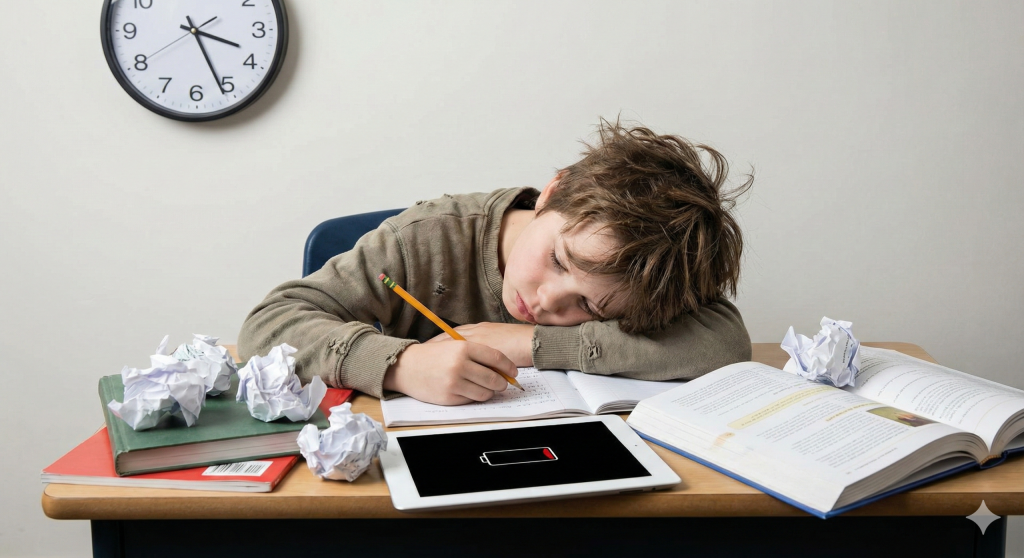
We call this the “After-School Collapse.”
We often hear parents say, “The teacher says she is doing fine in class, but the minute she gets home, she melts down over a simple worksheet.”
This is a massive red flag. It usually means your child is using 100% of their cognitive energy just to “survive” the school day. They are masking their difficulties in the classroom, but by 4:00 PM, their tank is empty. This isn’t a behavioral problem; it is an energy problem caused by inefficient processing.
The workload, or curriculum, that is generated by the school system that governs the school your child is enrolled is based on a set of assumptions. Some of these assumptions relate to the level of development in different areas of skills. Grade 8 students are assumed to have stronger fluency for reading and more efficient writing skills than grade 3 students.
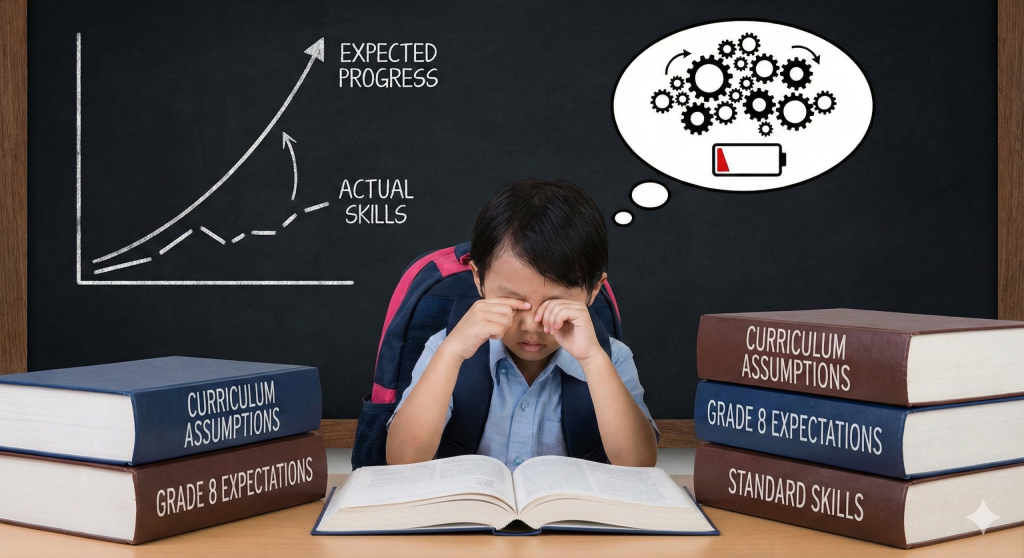
The same can be said for math. The curriculum is built around these assumptions and when one or more of the core skills needed to meet the expectations of the curriculum is lagging, children can and do struggle. The extent of these struggles depends almost entirely on the extent of the deficit between where the skills should be and where they are. Coping strategies will vary from student to student but all of those strategies require effort that was never intended or included when the curriculum was designed. The school day is taking something from these students that it wasn’t meant to and the result, for these students, is cognitive and emotional exhaustion. The outcome is the reaction you see when they get asked to do their reading or complete whatever homework may have been assigned.
Sign 5: Sticking to Familiar Tasks and Avoiding Anything New
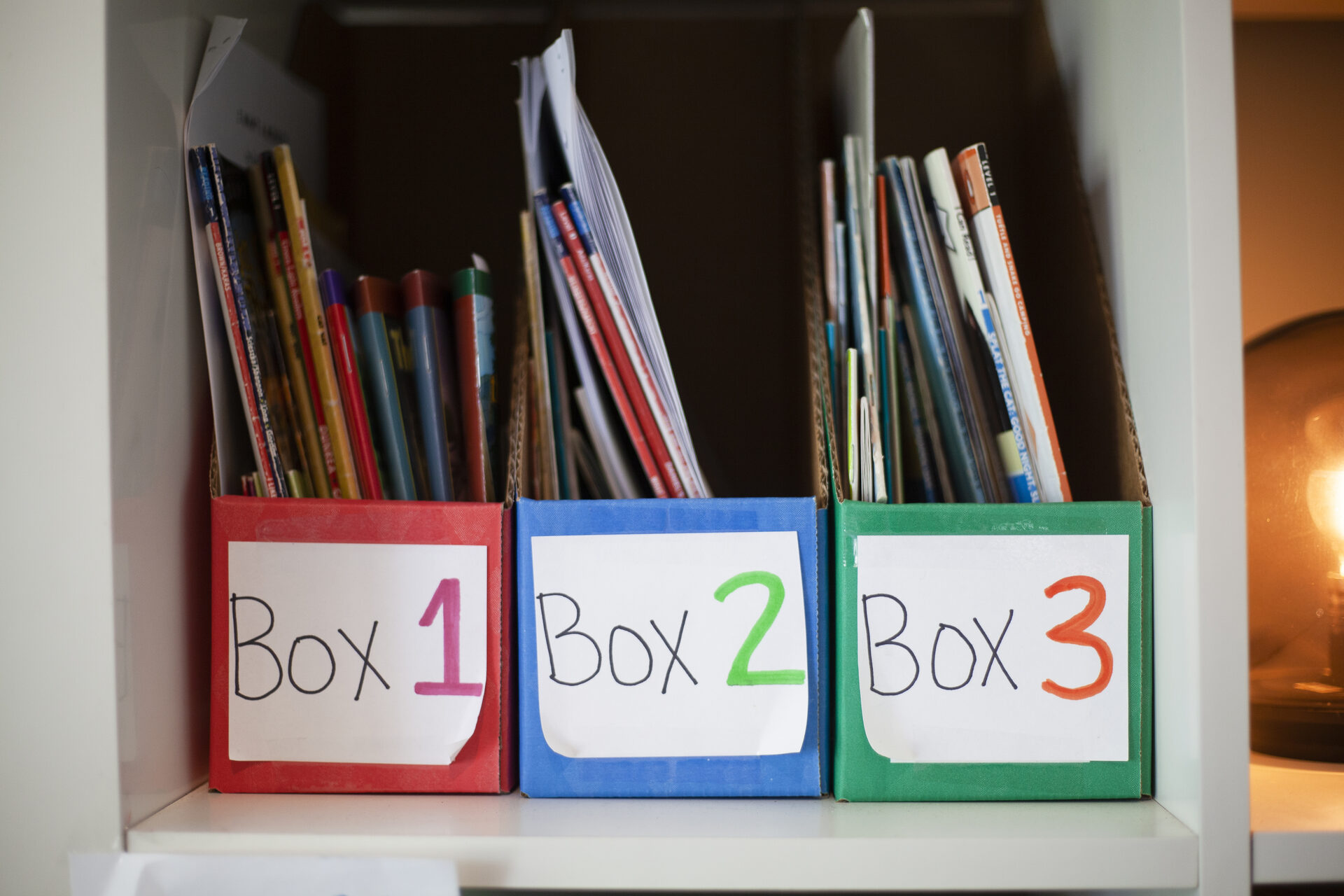
What you see: They can move quickly through a book they’ve already read, or sail through math they’ve memorized. But when something new comes along, it’s avoided.
Why it happens: Familiar tasks can mask the gaps. True progress shows when children can apply skills to new material, and that only happens when the foundations are strong.
What These Signs Tell You as a Parent
If you recognize your child in these signs, it’s okay. These struggles aren’t a reflection of their ability or effort. They’re signs that some of the fundamentals of learning haven’t clicked yet — and with the right support, those skills can be built.
Ready to Help Your Child Overcome Hidden Learning Gaps?
You shouldn’t have to watch your smart child struggle this hard. If any of these signs feel familiar, we can uncover why it’s happening—and fix it. You can call +1 (902) 425-7323 or email info@novaread.com to book an intake consultation at our Halifax or Bedford clinic.