The “Invisible Skill”: Why Smart Kids Struggle with Comprehension
December 8, 2025
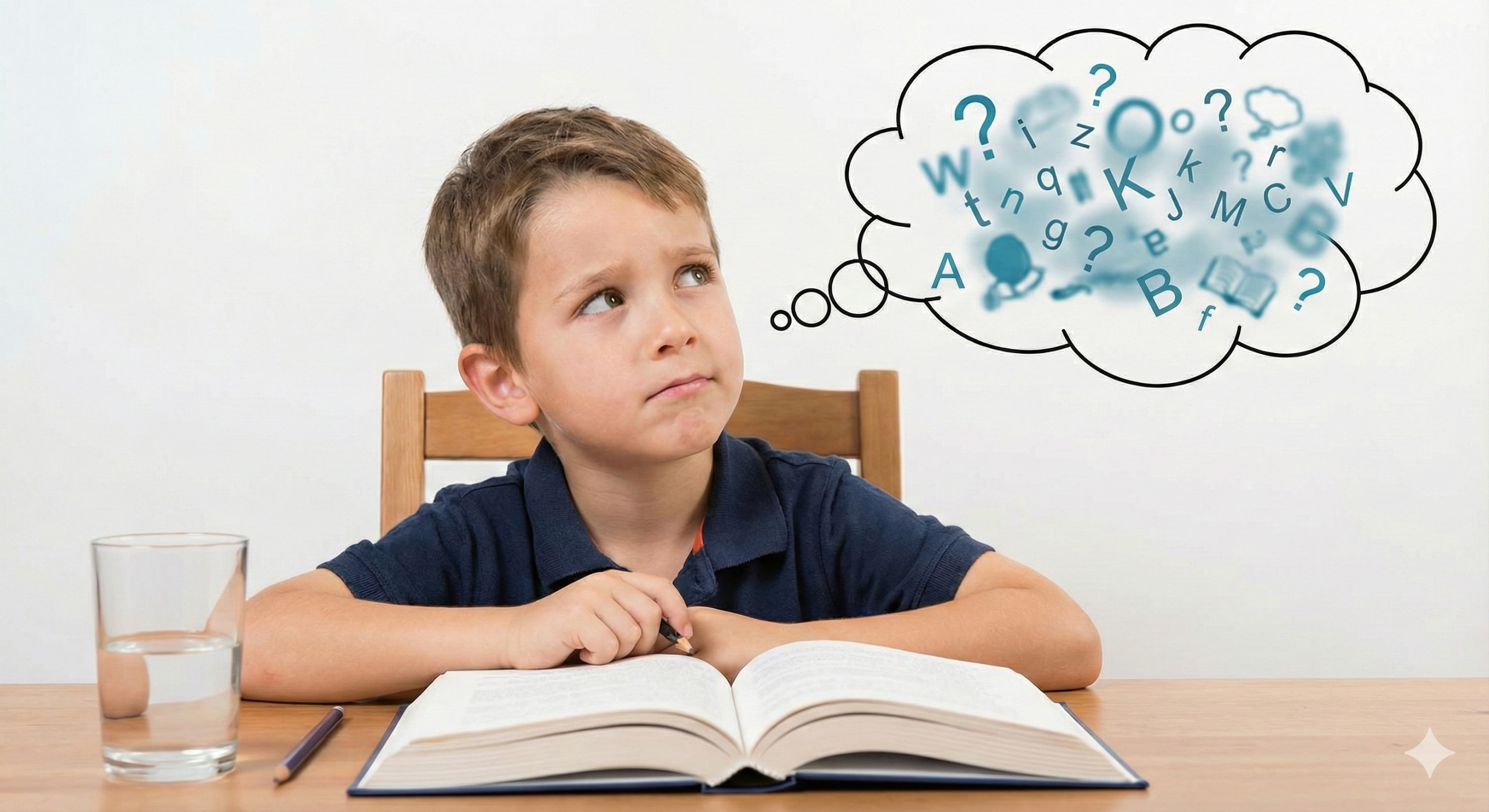
“My child can read the words……but nothing sticks”
When Fluent Reading Hides a Comprehension Gap
Some children read every word correctly but then struggle to answer even simple questions about the passage. It can feel puzzling: they’re fluent on the surface, yet comprehension just isn’t sticking.
Signs Your Child Reads Well but Struggles to Comprehend
– Your child reads sentences smoothly but can’t retell what just happened.
– They struggle to summarize a paragraph or remember key details.
– Homework that involves reading drains them, even if they read it ‘well.’ These overlap with the broader 8 signs your child may need literacy support.
Why Comprehension Problems Go Unnoticed for Years
Students with comprehension issues are often the last to be identified. Why? Because comprehension is invisible.
When a child can’t read the words, it is obvious—they stumble, guess, or stop. But when a child reads fluently yet understands nothing, it looks like success from the outside. You see the performance of reading, but you can’t see that the internal “movie screen” is blank.
The “Memory Loop” Trap We often see students who wake up early to re-read chapters over and over. They aren’t understanding; they are trying to memorize. It’s the same pattern as the memorization trap we see in younger readers.
When we ask them to summarize a chapter, they can often only tell us about the last two pages. That is because they are holding those details in their short-term memory loop just long enough to pass a quiz. The rest of the story is gone.
Signs of the “Invisible Gap” Because they can’t visualize language, these students often struggle in other areas that require “making a picture” in their head:
- following oral instructions (e.g., “Go upstairs, get your bag, and put on your red shoes”),
- understanding sports plays when a coach explains them verbally,
- answering test questions correctly but for the wrong reason (guessing).
Why Reading Fluency and Reading Comprehension Are Not the Same
This disconnect typically happens for one of two reasons:
1. Decoding Overload The process of reading takes so much effort that there is simply no mental energy left for understanding. The child is using 100% of their cognitive bandwidth just to sound out the words, leaving zero capacity to process what those words actually mean.
2. The “Mental Movie” is Missing The child can read the words, but they cannot turn them into mental images. This is a critical gap because we don’t actually remember the words we read; we remember the pictures those words create.
The images give the text meaning. The images are what we store in our memory. When we answer a question about a story, we aren’t repeating the text verbatim—we are describing the pictures we created in our mind. If a child cannot turn language into imagery, the words simply disappear as soon as they are spoken.
Why Poor Reading Comprehension Holds Smart Kids Back
Without comprehension, reading becomes a hollow task. Kids feel embarrassed knowing they ‘read the words’ but still missed the point. This leads to declining confidence across every subject. Comprehension challenges are one of the four faces of a language-based learning disability (LBLD), alongside reading, writing, and math.
How Psychoeducational Testing Reveals the Comprehension Gap
Standard school assessments often average skills together, which can mask specific deficits. A child might receive a passing grade in reading because their strong decoding skills compensate for their weak comprehension.
We look for the discrepancy.
In our assessments, we often see a distinct profile:
- Word Recognition: High (e.g., 80th percentile)
- Comprehension: Low (e.g., 20th percentile)
This data clearly shows that while the student can phonetically sound out words, they are not processing the meaning behind them.
Identifying this specific gap is critical. It allows us to bypass phonics instruction—which they don’t need—and focus entirely on the root cause: visualization and language processing.
How Do You Fix Poor Reading Comprehension?
When children can read words but don’t remember them, it’s often because decoding is still effortful or because comprehension skills aren’t solid yet. We use both Seeing Stars® (to build fluent decoding) and Visualizing & Verbalizing® (to strengthen comprehension and imagery). Together, these programs help children move beyond ‘saying the words’ to actually understanding, remembering, and enjoying what they read.
The Good News: Comprehension and Visualization Skills Can Be Built
If your child reads but doesn’t remember, it isn’t a lack of intelligence. It’s a skill gap. With the right tools, memory and comprehension improve, and reading becomes meaningful.
What Parents Can Do When Their Child Reads but Doesn’t Retain
If you’d like to talk through what you’re noticing, we’d be glad to listen. Visit our Contact Page to send us a note or give us a call. We’ll help you take the next step toward making learning easier — and more enjoyable — for your child. Call +1 (902) 425-7323 or email info@novaread.com to book an intake consultation at our Halifax or Bedford clinic.